- Yes — they genuinely lower the energy cost of running, by roughly 2–4% in the lab, for most people.
- But that's not 4% off your finish time. On the road it's closer to 1–2% — a couple of minutes off a four-hour marathon, not a new you.
- And “most people” isn't “everyone.” A real minority gain little — or nothing. The only way to know your number is to try.
Walk into any running shop and the wall shouts one number at you: 4%. It's on the box, in the reviews, in the legs of everyone who just PR'd. Few numbers in sport have travelled this far — and few have been bent this badly along the way. So let's do the thing the marketing skips: separate what the science actually found from what the billboard wants you to hear.
Where the “4%” came from
Back in 2017 a lab at the University of Colorado put 18 strong runners on a treadmill in an early Nike prototype and measured how much energy they burned at three race paces. Across the board, they used about 4% less energy than in the best normal racing shoes — and, unusually, every single runner saw a saving.1 The shoe got its nickname on the spot — the “Vaporfly 4%” — and an entire category of “super shoes” was born. The number was true. What happened next is that it slowly stopped meaning what it originally meant.
1 The science: what “4%” actually is
That 4% is running economy — how much oxygen (read: energy) you burn to hold a given pace. Cheaper running means more left in the tank for later. Crucially, it is not your finish time, and it never was. It's an efficiency number, measured on a treadmill, over a few minutes.
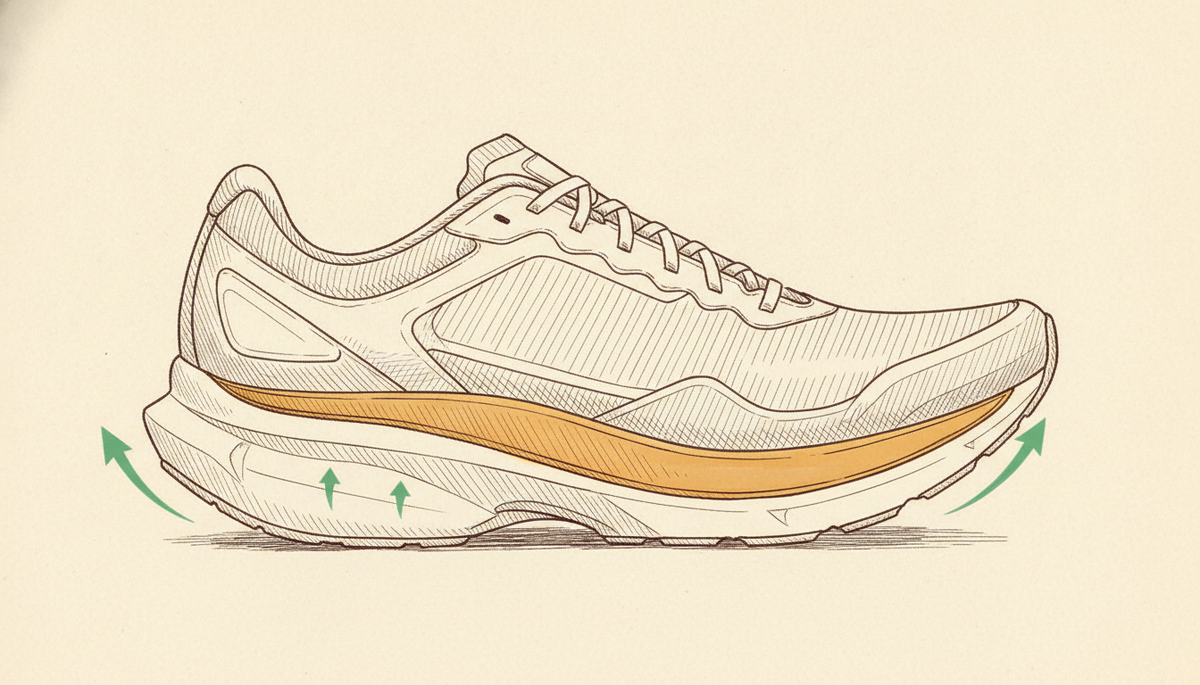
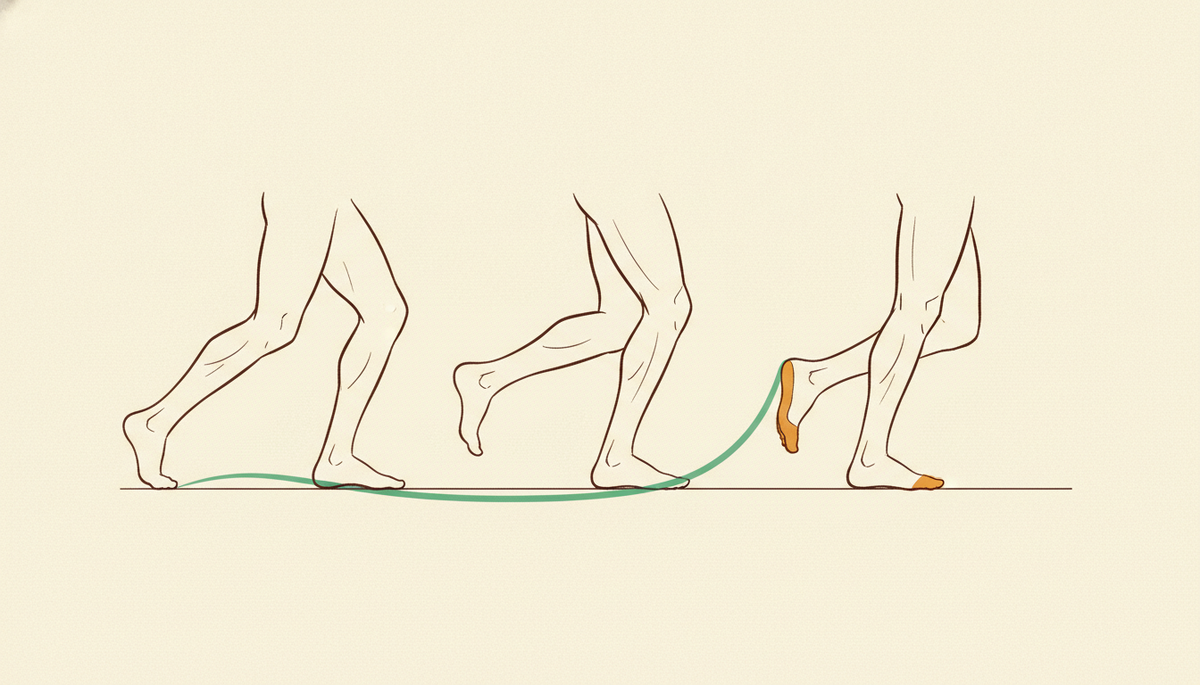
Two ingredients do the work. A thick slab of light, springy foam that returns more energy than old-school rubber, and a stiff carbon plate curved through the length of the sole. The plate stiffens the toe so your foot rolls forward instead of bending — less work at the ankle, a smoother “tip-over” at push-off.
Does the effect survive outside Nike's own lab? Mostly, yes. Independent groups reproduced it: Barnes & Kilding measured gains of 4.2% and 2.6% at race paces,2 and a 2025 review pooling 17 trials and 281 runners landed on a 2–4% economy gain overall.3 So the headline holds up better than most: the effect is real, and it repeats.
2 In practice: from lab to road
Here's the first place the number gets bent. A 4% economy gain does not make you 4% faster. Modelling and real-world race data put the actual payoff closer to 1–2% of your time. Meaningful — but a different order of magnitude than the box implies.
The 4% is the middle of a crowd — not a promise made to each runner in it.
And that average hides you. When researchers stopped reporting the group mean and looked at individuals, the spread was wide. Amateur runners ranged from nearly +10% all the way to slightly negative — a few genuinely ran less efficiently in the super shoe. The same “responders and non-responders” split shows up everywhere, from Kenyan internationals to weekend club runners.4
3 Putting it to work
So the science is solid and the road payoff is real but modest. What do you actually do with that? This is where most write-ups go quiet — so here's the practical part.
- Save them for race day and key sessions. The foam packs down and they're pricey per kilometre — there's no reason to spend that “pop” on easy miles.
- Expect a few hundred kilometres of bounce, not a lifetime. The spring fades well before the upper looks worn — plan your rotation around that.
- The longer the race, the more that small % matters. A marathon compounds 1–2% into real minutes; over a 5k it's a handful of seconds.
- Break them in before you race in them. The tall, soft stack feels tippy at first, and some runners feel extra calf or ankle load — your legs get a vote.
- Run your own test. Same loop, same effort, old shoe vs new — you'll feel “responder or not” within a couple of runs. That's your number, not the box's.
The catch
- —A treadmill at 16 km/h isn't your rainy 30k with a headwind. Lab economy is the best case.
- —The gain is an average. Yours could be bigger, or basically zero.
- —They wear out faster than trainers and cost a lot — the “per good race” price is high.
- —A faster shoe isn't a fitter you. They don't build an engine; they just spend yours a little better.
- —Most data is on trained runners at race pace. If you're slower or heavier, there's simply less known about your case.
This is the rare case where the hype has real science under it — just less of it than the billboard implies. For most runners, super shoes buy a genuine 1–2% on race day: worth having for a goal race, not worth a remortgage or a guilt trip. Buy them for the race, not the miracle — and test your own number before you trust anyone else's.
Sources
- Hoogkamer W, Kipp S, Frank JH, et al. A Comparison of the Energetic Cost of Running in Marathon Racing Shoes. Sports Medicine, 2018;48(4):1009–1019. pubmed.ncbi.nlm.nih.gov
- Barnes KR, Kilding AE. A Randomized Crossover Study Investigating the Running Economy of Highly-Trained Male and Female Distance Runners in Marathon Racing Shoes versus Track Spikes. Sports Medicine, 2019;49(2):331–342. pubmed.ncbi.nlm.nih.gov
- The role of footwear in improving running economy: a systematic review with meta-analysis of controlled trials. Scientific Reports, 2025. nature.com
- Variability in Running Economy of Kenyan World-Class and European Amateur Male Runners with Advanced Footwear Running Technology. Sports Medicine – Open, 2023. ncbi.nlm.nih.gov
- Mechanisms, Economy, and Performance of Advanced Footwear Technology in Endurance Running — A Review. 2024. mdpi.com
Numbers rounded for readability; follow the links for the exact figures and methods. Spot something we got wrong? Tell us — we update when the reading does.