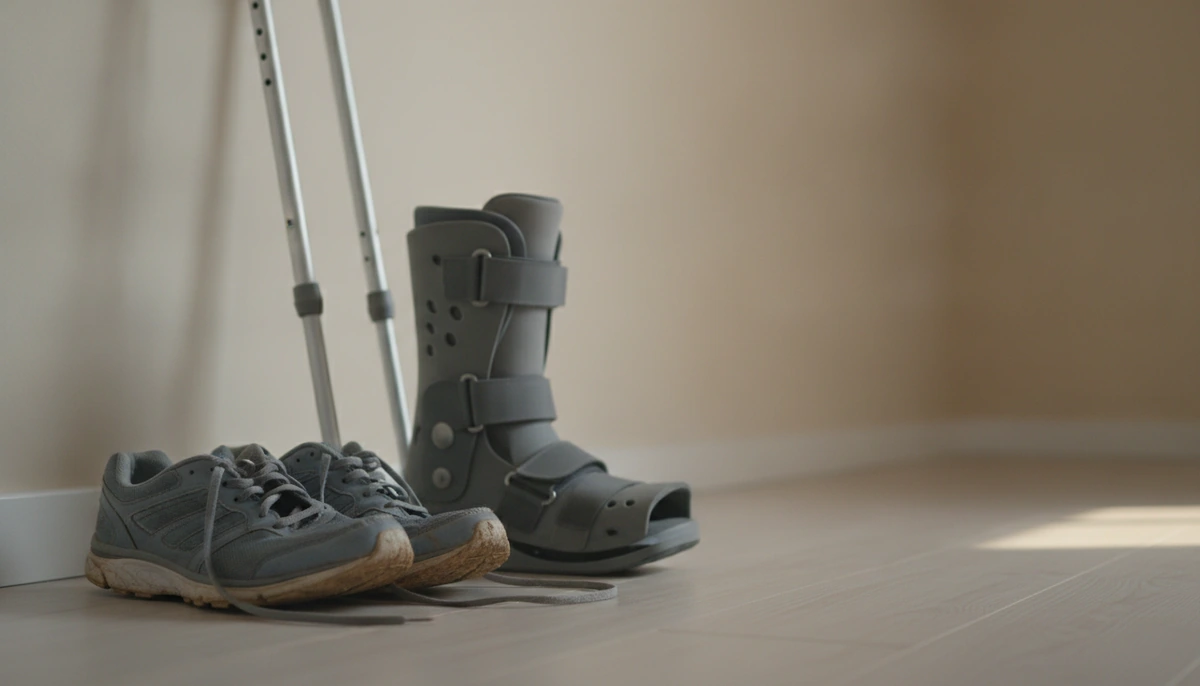
Stop training and your endurance starts to fade within about two weeks. In trained people, VO2max was a few percent lower within about two weeks, mostly because there was less blood for the heart to pump. Then the muscle lost part of its aerobic machinery, and by two to three months the decline flattened out, still above people who never trained. Endurance tests in the lab often dropped more than VO2max did. Strength built by lifting usually lasted longer; in endurance athletes, leg strength fell about as fast as VO2max. Bed rest cost far more VO2max, and a cast far more leg strength, than simply not training. In the studies, people kept most of their fitness on much less training as long as the sessions stayed hard. Trained athletes kept it for a few weeks on far fewer kilometres, but not on far fewer sessions. That your muscles remember and bring you back faster has not been shown for endurance.
- Two weeks off: a few percent of VO2max, more on tests to exhaustion. VO2max was 4 to 7% lower after about two weeks; time to exhaustion fell 3 to 25% in three small studies.
- The blood goes first, then the muscle. In seven highly trained people VO2max was 7% lower after 12 days, 14% after eight weeks and 16% after twelve.
- VO2max is the slow alarm. With one hard session a week, VO2max held for four weeks while time to exhaustion in a lab ride fell from 79 to 62 minutes.
- Strength usually outlasts muscle size. Twenty weeks after beginners stopped lifting, their muscles were back to the old size and about 60% of the strength gain was still there.
- Lying still is a different story. A leg in a cast lost 9% of its strength in five days, and three weeks of bed rest cost 27% of VO2max.
A sprained ankle, a stress fracture, a new baby, a month of late evenings at work. Sooner or later most runners and cyclists stop for a while, and the first question is how much will be left when they come back.
Exercise scientists call the answer detraining: the partial or complete loss of what training built, when training is cut back or stopped.1 Below is what the studies found: how fast each part of your fitness goes, whether endurance and strength differ, and why it matters how still you are. Then what kept fitness in the studies, and how fast it came back.
1 What exactly do you lose?
What training built, and it goes in a different order than it came.
Endurance training enlarges the heart's stroke, so it pumps more blood per beat. It adds blood volume. In the muscle it adds mitochondria, the small power plants that use oxygen, and capillaries, the fine vessels that bring the oxygen in.2 Strength training adds muscle, and teaches your nervous system to use the muscle you have.3 Detraining is those changes running backwards.
Three situations come up again and again in the studies below. Stopping completely is one. Training less is another, and people who kept a little training often kept most of their fitness. The third is lying in bed or having a limb in a cast, which takes away movement itself and turns out to cost the most. A taper, the planned cut before a race, is a short, deliberate form of training less: the load comes down for a few weeks so that you arrive fresh, and the hard sessions stay.4
2 How fast does endurance go?
In weeks, and in order: first the blood, then the muscle.
Start with a short break. When twelve trained runners stopped for 14 days, their VO2max went from 61.6 to 58.7, about 4%.5 Their VO2max test, which runs to exhaustion, ended 9% sooner, and their heart rate at the same pace was 11 beats higher. In fifteen male endurance athletes, two weeks off cost 4% of VO2max and 3% of the test time.6 In six well-trained runners who stopped for 15 days, a hard run to exhaustion was 25% shorter.7 The position stand of the American College of Sports Medicine adds that an occasional missed session seems not to lower VO2max.8 If you have trained for years and miss a fortnight, these studies put your cost at a few percent of VO2max, and more on a test to exhaustion.
The blood is the fastest to go. A review of the field says blood volume may already fall within the first two days.1 Across studies of endurance-trained athletes, blood and plasma volume fell 5 to 12%.9 In eight endurance-trained men who stopped for two to four weeks, blood volume was 9% lower and plasma, the fluid part of the blood, 12% lower. With less blood to fill it, the heart pumped 12% less per beat, VO2max was 6% lower, and the heart rate at the same effort 11% higher.10
The best-known study of a longer break followed seven highly trained people for twelve weeks, three of them successful competitors and one of them a woman.2 Their VO2max was already 7% lower after 12 days, mostly because the heart pumped less per beat. By week eight it was 14% lower, now also because the muscle took up less of the oxygen it was sent. At week twelve it was 16% lower, a last step small enough to be chance (figure 2). The aerobic enzymes in the muscle went with a half-time of twelve days: half of their eventual drop had happened within about two weeks. The capillaries did not clearly decline.

Twelve weeks in, these people still had a higher VO2max than people who had never trained: 50.8 against 43.3 millilitres of oxygen per kilogram per minute.2 A second paper from the same lab measured seven trained people at the same moments. Their heart rate and lactate at the same effort stopped climbing after 56 days, and their lactate threshold stayed above untrained values.11 A meta-analysis of studies in athletes, comparing different studies, found no clear difference in VO2max loss between breaks of one to three months and longer ones.12 The review draws the line. Highly trained athletes lose VO2max fast but usually stay above sedentary values. Recently trained people often lose all of their gain after more than four weeks.1 One limit applies to the whole section: these are small groups, mostly of men.
3 Is VO2max the number to watch?
It's the slower one. In several studies, endurance in the lab slipped while VO2max held.
Nine well-trained triathletes, cyclists and runners cut back to one hard 35-minute session a week for four weeks.13 Their VO2max stayed where it was, 4.57 against 4.54 litres a minute. Their time to exhaustion in a ride at a steady 75% of VO2max fell from 79 to 62 minutes, a fifth less. Tests to exhaustion can swing far more than a race time. In runners who cut their training by 70%, time to exhaustion in the VO2max test even rose 9.5%, while their 5-km times stayed the same.14 A fifth less time to exhaustion is not a fifth slower in a race. Ten runners cut their running by two thirds for four weeks and kept all of it easy. They held their VO2max and ran 5 km 12 seconds slower.15
The same pattern turns up in a longer trial. People who trained 13 minutes a day for fifteen weeks held their VO2max, but a ride to exhaustion went from 139 to 123 minutes.16 In the runners who stopped for two weeks, VO2max fell 4% and their VO2max test ended 9% sooner (figure 3).5 Not every study shows the gap: in another two-week study, both fell by about the same, 4% and 3%.6 Still, when you cut back, your endurance can slip before your VO2max shows it. VO2max is your ceiling, and how long you can work close to it can change before the ceiling does. We go into that difference in lab numbers versus race numbers.

4 Does strength go the same way?
Strength built by lifting mostly went more slowly than endurance did in other studies, and outlasted the muscle it was built in. In endurance athletes, leg strength fell about as fast as VO2max.
Twelve power athletes who stopped for 14 days lost 1.7% on the bench press and 0.9% on the squat, neither of them beyond chance.17 Their strength in the lowering phase of a knee extension, measured on a machine, did drop clearly, by 12%. Twenty-four trained swimmers cut back to three or one sessions a week, or stopped, for four weeks.18 Their strength on a dry-land swim bench held in all three groups, while their power in the water fell, by 13.6% on average. That is the closest these studies come to separating strength from the skill of using it in a sport.
Over months, strength and muscle drift further apart. Nineteen young adults trained one leg for ten weeks and then did nothing for twenty.3 Their muscle went back to its old size, and about 60% of the strength they had gained was still there. In a trial of 70 adults aged 20 to 35 and 60 to 75, sixteen stopped after sixteen weeks of strength training. After 32 weeks they were 7% weaker, but still 23% stronger than when they started. Their muscle fibres, meanwhile, were back to their old size (figure 4).19 The usual explanation is that part of strength is learned: your nervous system keeps knowing how to use the muscle.

Not every source agrees. The ACSM position stand says that strength gains "reverse quickly" when exercise stops completely.8 In 23 women aged 18 to 35 who stopped upper-body training for five weeks, strength and muscle fell by similar percentages, and the two losses went together.20 A meta-analysis of 103 studies of people who stopped strength training puts the rest in order.21 All forms of strength declined. Strength over many repetitions dropped the most, maximal force less, and explosive power, which there includes sprints, the least. In the studies we read, sprint speed on its own was hardly measured after a break. The longer the stop, the bigger the loss, and for maximal force and power it was bigger in inactive people than in recreational athletes. In endurance athletes the picture is closer. Fifteen who stopped for two weeks lost 5% of their knee-extension strength and 4% of VO2max.6 The triathlete in section 7 lost 8% of knee strength and 9 to 11% of VO2max in twelve weeks.22 If you lift as well as run or ride, the strength from lifting was usually the part of fitness that lasted longest in these studies.
5 Does it matter how still you are?
A lot. In these studies, bed rest cost far more VO2max, and a cast far more leg strength, than simply not training.
In 1966, five healthy 20-year-old men spent three weeks in bed in Dallas. One had been sedentary, another ran up to 75 miles a week.23 Their VO2max fell 27%. The researchers tested the same men again 30 years later. Their summary: three weeks of bed rest at 20 had cost more cardiovascular capacity than 30 years of ageing.24 Compare that with the 7% after three weeks in the trained people who simply stopped (figure 5).

A cast does the same to the muscle under it. In young men who had done no strength training in the previous six months, one leg went into a full cast. Strength fell 9% after five days in one group of twelve, and 23% after fourteen days in another.25 The power athletes who stopped training for fourteen days lost 7% in a held knee extension, within chance, and 12% in the lowering phase.17
One trial suggests a boot on one ankle does not take much of the heart with it. Nineteen recreationally trained men, after a four-week training block, spent two weeks on crutches with one ankle in a boot. Their VO2max changed so little that the authors call it trivial, though they add that the study may have been too small to see a drop.26 Their peak power in the test fell by about 10 watts in both groups, a moderate drop by the authors’ measure. Their first threshold, the effort where breathing starts to pick up, fell mainly in the half who also sat in a heat chamber.
For your fitness, what an injury still lets you move matters more than its name. A broken wrist, a sprained ankle and a week in bed are three different situations. Whether it is safe to train with a given injury is a question for whoever treats it. In one case report in section 7, a cyclist rode on after breaking her collarbone. A nerve problem and surgery followed, though the authors could not say whether the riding caused it.27
6 What kept fitness in the studies?
Fewer or shorter sessions, kept hard. In people who had trained for ten weeks the intensity mattered most; in trained athletes, how often they trained mattered too.
One lab tested the three dials one at a time. People trained 40 minutes a day, six days a week, for ten weeks, and then turned one dial down for fifteen weeks. Training two or four days a week instead of six, at the same intensity and length, kept VO2max where it was.28 So did 26 or 13 minutes a day instead of 40, although at 13 minutes the long ride to exhaustion shortened by about a tenth.16 Making the sessions a third or two thirds lighter did not hold VO2max, and the long ride got 21% and 30% shorter (figure 6).29

Those people had trained for only ten weeks. A review of the minimal dose says most of this evidence comes from untrained people, and that "insufficient data exists" for athletes. For athletes it points to taper studies, in which athletes cut back for a few weeks before a race. Over up to four weeks, athletes kept their performance with 60 to 90% less volume. The sessions stayed hard, and they trained nearly as often: at most about a fifth fewer sessions.30,4 The trained groups here fit that. Ten well-conditioned runners ran 70% less for three weeks, on five days instead of six, with a third of their usual intervals and races. They kept their 5-km times and VO2max.14 Where the number of sessions fell much further, losses showed. Swimmers on three sessions a week instead of six kept VO2max, those on one did not, and power in the water fell in every group.18 One hard session a week kept Madsen's athletes' VO2max, but not their endurance in the lab.13 Fourteen top-level kayakers took a five-week break. Those who kept two moderate 40-minute endurance sessions a week, plus one strength session, lost about half as much VO2max: 5.6% against 11.3%. Their paddling power fell in both groups.31
For strength, the same review reports that one session a week at the same load kept strength for up to 32 weeks.30,19
When running is out, other training can take its place. Sixteen trained runners trained five days a week for six weeks, including 30-minute sessions at 90 to 100% of VO2max. One group did all of it running in the deep end of a pool, with a flotation belt, and VO2max did not change in either group.32 After four weeks of deep-water running only, runners' 5-km time on the treadmill had not changed.33 In 32 young people, six weeks of cycling or water running kept their 2-mile time as well as running did. VO2max dipped slightly in all three groups.34 None of these runners was injured, though; they were healthy runners asked to switch.
With a limb in a cast, the option that helped in trials is the other side. In a trial of 16 people with a forearm in a cast for four weeks, some trained the wrist flexors of the other arm. The same muscle in the cast arm lost 2.4% of its strength, against 21.6% without. The muscle on the other side of the wrist lost strength in both groups.35 A review of eight such studies, all with an arm immobilised, found the same direction, and warns that the studies vary in quality.36
7 How fast does it come back?
For endurance, not faster than it went, in the few studies that tracked it. For muscle, the picture is mixed.
For strength, part of the gain never left, so there is less to win back. Whether a muscle that was trained before grows back faster is less clear. In the twenty-week study it did not, though its authors say their design could not test the idea properly.3 In a 2024 study of twelve people, extra nuclei stayed in a previously trained arm through 16 weeks off. Whether that helps "remains to be determined", the authors write.37 In a small study of seven untrained men, who also lifted somewhat more the second time, lean muscle grew more in a second seven-week block than in the first.38 The idea that a muscle keeps nuclei as a memory was first seen in rodents,39 and a 2020 review found "no consensus".40
For endurance, 23 young people trained one leg for twelve weeks. Nine months later the muscle showed no coherent sign in its gene activity of remembering it.41 In the six runners who stopped for 15 days, VO2max came back in 15 days of training, but their hard run was still 9% shorter.7 The longest timelines come from two case reports (figure 7). A masters cyclist aged 49 needed surgery after a collarbone fracture and spent the first two of four weeks off mostly lying down. Her VO2max fell 25.7%. It was back after six weeks of rebuilding, and her lactate threshold after four. Her power at a higher lactate level was still 5.5% lower after eleven.27

A triathlete aged 53 only walked and did some core work for twelve weeks, and his VO2max fell 9 to 11%. When he was measured after twelve weeks of rebuilding, it was back. His running economy was still 17.7% worse, though he had also run less in that phase than before.22 In these people, coming back took about as long as being away, or longer. None of the studies we read shows endurance returning faster than it went.
8 So what does this leave you with?
Four answers.
- How fast does it go? In trained people who stopped completely, VO2max was a few percent lower within about two weeks. In the longest study it was 14% lower by two months and 16% by three, flattening out above people who never trained. Endurance tests in the lab often dropped more.
- Does it differ by type? Mostly yes. Blood and the heart's stroke go first, the muscle's aerobic machinery next, capillaries hardly at all. Strength built by lifting usually lasts longer than endurance, and longer than muscle size, though not in every study. In endurance athletes, leg strength fell about as fast as VO2max. Power in the water can go while strength on land holds.
- What slowed it in the studies? Keeping the sessions hard while doing fewer or shorter ones, up to a point: in trained athletes, cutting the number of sessions far did not hold endurance. Deep-water running or cycling for healthy runners who swapped their running. Training the same muscle on the other side when one arm was in a cast. Most of that evidence comes from people who were not injured, and much of it from people who were not athletes.
- How fast does it come back? In the studies we read, endurance did not come back faster than it went. Strength partly never left.
In the studies, a short break cost a few percent of VO2max and more on a test to exhaustion, and lying still cost a lot. The training that held fitness was less of it, kept hard, and for athletes not much less often.
How we did this (for the curious)
We first mapped how fourteen sources (reviews, a meta-analysis, a position stand, a definition paper and a textbook) describe detraining. There is no position stand or consensus statement on detraining itself; the definition the field uses comes from Mujika and Padilla. Then we read the studies behind each figure. Every number on this page is in a source we hold. Where we did arithmetic ourselves (the 0.7% in figure 3), the caption says so. Some sources we could read only as an abstract; they are marked in the list below, and nothing on this page rests on their methods sections. One older trial we read from a scan. The figures put different studies side by side: the people, their training and the length of the break differ from row to row, so compare directions and rough sizes, not decimals.
Sources
41 sources, all research papers and reviews (T1). We hold every one; we read 32 in full and 9 as an abstract, marked below.
- T1 Mujika I, Padilla S. Cardiorespiratory and metabolic characteristics of detraining in humans. Medicine & Science in Sports & Exercise. 2001;33(3):413–421. doi:10.1097/00005768-200103000-00013. The definition of detraining as the partial or complete loss of what training built; blood volume may fall within the first two days; in highly trained athletes VO2max falls fast but usually stays above sedentary values, while recently trained people often lose all of their gain after more than four weeks.
- T1 Coyle EF, Martin WH, Sinacore DR, Joyner MJ, Hagberg JM, Holloszy JO. Time course of loss of adaptations after stopping prolonged intense endurance training. Journal of Applied Physiology. 1984;57(6):1857–1864. doi:10.1152/jappl.1984.57.6.1857. 7 highly trained people, one of them a woman, twelve weeks off: VO2max −7% after 12 days, −14% at eight weeks and −16% at twelve, the last step not significant; after 84 days 50.8 against 43.3 ml/kg/min in people who never trained; the early drop tied to stroke volume, the later one to the muscle; aerobic enzymes fell with a half-time of 12 days and levelled off 50% above untrained values; capillaries did not clearly decline.
- T1 Psilander N, Eftestøl E, Cumming KT, et al. Effects of training, detraining, and retraining on strength, hypertrophy, and myonuclear number in human skeletal muscle. Journal of Applied Physiology. 2019;126(6):1636–1645. doi:10.1152/japplphysiol.00917.2018. 9 men and 10 women, untrained, ten weeks of one-leg strength training, 20 weeks off: muscle thickness back to baseline, about 60% of the 20% strength gain still there; on retraining the previously trained leg did not respond better than the other, though the authors say the data did not allow a rigorous test of muscle memory.
- T1 Mujika I, Padilla S. Scientific bases for precompetition tapering strategies. Medicine & Science in Sports & Exercise. 2003;35(7):1182–1187. doi:10.1249/01.MSS.0000074448.73931.11. A taper as a progressive, nonlinear reduction of the training load for a variable period, to reduce the stress of daily training and optimise performance.
- T1 Abstract. Houmard JA, Hortobágyi T, Johns RA, et al. Effect of short-term training cessation on performance measures in distance runners. International Journal of Sports Medicine. 1992;13(8):572–576. doi:10.1055/s-2007-1024567. 12 distance runners, 14 days off: VO2max 61.6 to 58.7 ml/kg/min (−4%); time to exhaustion in the VO2max test 13.0 to 11.8 min; heart rate at the same running speeds 11 beats higher.
- T1 Chen YT, Hsieh YY, Ho JY, Lin TY, Lin JC. Two weeks of detraining reduces cardiopulmonary function and muscular fitness in endurance athletes. European Journal of Sport Science. 2022;22(3):399–406. doi:10.1080/17461391.2021.1880647. 15 male endurance athletes, two weeks off: VO2max −4%, time to exhaustion in the VO2max test −3%, knee-extensor strength −5%, knee-flexor strength not significantly changed.
- T1 Abstract. Houston ME, Bentzen H, Larsen H. Interrelationships between skeletal muscle adaptations and performance as studied by detraining and retraining. Acta Physiologica Scandinavica. 1979;105(2):163–170. doi:10.1111/j.1748-1716.1979.tb06328.x. 6 well-trained runners, 15 days off and 15 days of retraining: VO2max −4%, back with retraining; performance time in an intense run −25%, still 9% below the start after retraining.
- T1 Garber CE, Blissmer B, Deschenes MR, et al. American College of Sports Medicine position stand. Quantity and quality of exercise for developing and maintaining cardiorespiratory, musculoskeletal, and neuromotor fitness in apparently healthy adults. Medicine & Science in Sports & Exercise. 2011;43(7):1334–1359. doi:10.1249/MSS.0b013e318213fefb. An occasional missed session seems not to lower VO2max; strength gains "reverse quickly" when exercise stops completely.
- T1 Mujika I, Padilla S. Detraining: loss of training-induced physiological and performance adaptations. Part I: short term insufficient training stimulus. Sports Medicine. 2000;30(2):79–87. doi:10.2165/00007256-200030020-00002. Blood and plasma volume 5 to 12% lower in endurance-trained athletes after training stopped.
- T1 Coyle EF, Hemmert MK, Coggan AR. Effects of detraining on cardiovascular responses to exercise: role of blood volume. Journal of Applied Physiology. 1986;60(1):95–99. doi:10.1152/jappl.1986.60.1.95. 8 endurance-trained men, two to four weeks off: blood volume −9%, plasma volume −12%, stroke volume −12%, VO2max −6%, heart rate at the same effort +11%.
- T1 Abstract. Coyle EF, Martin WH, Bloomfield SA, Lowry OH, Holloszy JO. Effects of detraining on responses to submaximal exercise. Journal of Applied Physiology. 1985;59(3):853–859. doi:10.1152/jappl.1985.59.3.853. Heart rate and blood lactate at the same effort rose for 56 days, then levelled off; mitochondrial enzymes 40% lower; the lactate threshold still above untrained values after 84 days.
- T1 Zheng J, Pan T, Jiang Y, Shen Y. Effects of short- and long-term detraining on maximal oxygen uptake in athletes: a systematic review and meta-analysis. BioMed Research International. 2022;2022:2130993. doi:10.1155/2022/2130993. No significant difference in VO2max change between 30 to 90 days and more than 90 days of detraining.
- T1 Madsen K, Pedersen PK, Djurhuus MS, Klitgaard NA. Effects of detraining on endurance capacity and metabolic changes during prolonged exhaustive exercise. Journal of Applied Physiology. 1993;75(4):1444–1451. doi:10.1152/jappl.1993.75.4.1444. 9 well-trained male triathletes, cyclists and runners; four weeks of one 35-minute session a week at 95% of maximal heart rate: VO2max 4.57 against 4.54 l/min; time to exhaustion at 75% of VO2max 79 to 62 min (−21%).
- T1 Abstract. Houmard JA, Costill DL, Mitchell JB, Park SH, Hickner RC, Roemmich JN. Reduced training maintains performance in distance runners. International Journal of Sports Medicine. 1990;11(1):46–52. doi:10.1055/s-2007-1024761. 10 well-conditioned runners cut weekly distance by 70% and frequency by 17% for three weeks, keeping some intervals and races at about 95% of VO2max: no significant change in 5-km race times or VO2max, while time to exhaustion in the VO2max test rose 9.5%.
- T1 Abstract. McConell GK, Costill DL, Widrick JJ, et al. Reduced training volume and intensity maintain aerobic capacity but not performance in distance runners. International Journal of Sports Medicine. 1993;14(1):33–37. doi:10.1055/s-2007-1021142. 10 well-conditioned men; four weeks with volume −66%, frequency −50% and all running below 70% of VO2max: VO2max unchanged, 5 km from 16.6 to 16.8 min (12 s).
- T1 Hickson RC, Kanakis C Jr, Davis JR, Moore AM, Rich S. Reduced training duration effects on aerobic power, endurance, and cardiac growth. Journal of Applied Physiology. 1982;53(1):225–229. doi:10.1152/jappl.1982.53.1.225. 13 people, after ten weeks of 40 min a day, six days a week, trained 26 or 13 min a day for 15 weeks: VO2max held in both; time to exhaustion cycling at about 80% of VO2max held at 26 min and fell 10% by the authors’ figure (139 to 123 min) at 13 min.
- T1 Abstract. Hortobágyi T, Houmard JA, Stevenson JR, et al. The effects of detraining on power athletes. Medicine & Science in Sports & Exercise. 1993;25(8):929–935. doi:10.1249/00005768-199308000-00008. 12 power athletes, 14 days off: bench press −1.7%, squat −0.9%, isometric knee extension −7%, vertical jump +1.2%, none of them significant; eccentric knee strength −12% in every athlete.
- T1 Abstract. Neufer PD, Costill DL, Fielding RA, Flynn MG, Kirwan JP. Effect of reduced training on muscular strength and endurance in competitive swimmers. Medicine & Science in Sports & Exercise. 1987;19(5):486–490. PMID 3683154. Three groups of eight male swimmers, four weeks of three sessions a week, one session a week or no training: strength on a swim bench did not fall in any group; swim power fell in all groups, −13.6% on average; VO2max fell with one session a week (4.75 to 4.62 l/min), not with three.
- T1 Bickel CS, Cross JM, Bamman MM. Exercise dosing to retain resistance training adaptations in young and older adults. Medicine & Science in Sports & Exercise. 2011;43(7):1177–1187. doi:10.1249/MSS.0b013e318207c15d. 70 adults aged 20 to 35 and 60 to 75 with no leg strength training in the previous five years, 16 weeks of training; the 16 who then stopped for 32 weeks: knee strength −7% but still 23% above baseline, fibre size back to baseline. One session a week at the same load kept strength.
- T1 Häkkinen K, Newton RU, Walker S, et al. Effects of upper body eccentric versus concentric strength training and detraining on maximal force, muscle activation, hypertrophy and serum hormones in women. Journal of Sports Science and Medicine. 2022;21(2):200–213. doi:10.52082/jssm.2022.200. 23 physically active women aged 18 to 35, ten weeks of upper-body training, then five weeks off: 1RM −6.6% and −8.0%, total muscle −6.5% and −6.1% in the two groups; the changes in muscle and in bench-press strength correlated.
- T1 Bosquet L, Berryman N, Dupuy O, et al. Effect of training cessation on muscular performance: a meta-analysis. Scandinavian Journal of Medicine & Science in Sports. 2013;23(3):e140–e149. doi:10.1111/sms.12047. 103 studies: all forms of strength declined after strength training stopped, strength over many repetitions the most and explosive power the least; the longer the stop, the larger the loss; larger in inactive people than in recreational athletes, and in people over 65.
- T1 Lepers R, Mater A, Assadi H, et al. Effect of 12 weeks of detraining and retraining on the cardiorespiratory fitness in a competitive master athlete: a case study. Frontiers in Physiology. 2024;15:1508642. doi:10.3389/fphys.2024.1508642. A highly trained triathlete aged 53.8 who only walked and did core work for 12 weeks: VO2max per kilogram −9.1% (cycling) and −10.9% (running), absolute −6.8% and −8.5%, knee-extensor strength −8.2%, running economy 22% worse; after 12 weeks of retraining VO2max back, economy still 17.7% worse; running made up a smaller share of training in that phase than before.
- T1 McGuire DK, Levine BD, Williamson JW, et al. A 30-year follow-up of the Dallas Bedrest and Training Study: I. Effect of age on the cardiovascular response to exercise. Circulation. 2001;104(12):1350–1357. doi:10.1161/circ.104.12.1350. The five 1966 subjects described one by one: one sedentary before the study, one running up to 75 miles a week.
- T1 Mitchell JH, Levine BD, McGuire DK. The Dallas Bed Rest and Training Study: revisited after 50 years. Circulation. 2019;140(16):1293–1295. doi:10.1161/CIRCULATIONAHA.119.041046. In 1966, 5 healthy 20-year-old men spent three weeks in bed: VO2max −27%; "3 weeks of bed rest at age 20 reduced cardiovascular capacity more than 30 years of aging".
- T1 Wall BT, Dirks ML, Snijders T, et al. Substantial skeletal muscle loss occurs during only 5 days of disuse. Acta Physiologica. 2014;210(3):600–611. doi:10.1111/apha.12190. 24 healthy young men with one leg in a full cast for 5 or 14 days: strength −9.0% and −22.9%, thigh muscle cross-section −3.5% and −8.4%.
- T1 Cocking S, Townsend N, Labidi M, et al. Impact of heat exposure during immobilization-induced de-training and re-training on aerobic capacity and haemoglobin mass. Experimental Physiology. 2026. doi:10.1113/EP092931. 19 recreationally trained men after a four-week training block, two weeks on crutches with one ankle in a therapeutic boot (half of them also with heat sessions): VO2max changed trivially and not significantly, and the authors say the study may have been underpowered; oxygen uptake at the gas exchange threshold lower, mainly in the heat group; peak power in the test −10 W overall, a moderate reduction, with no difference between groups. The authors also suggest the immobilisation may have acted somewhat like a taper.
- T1 Nichols JF, Robinson D, Douglass D, Anthony J. Retraining of a competitive master athlete following traumatic injury: a case study. Medicine & Science in Sports & Exercise. 2000;32(6):1037–1042. doi:10.1097/00005768-200006000-00001. A female masters cyclist aged 49.5 who crashed and broke her collarbone, rode on, developed a nerve impingement and needed surgery; 32 days off, the first two weeks mostly lying down: VO2max −25.7%; VO2max back after six weeks of retraining, lactate threshold after four; power at 4 mmol/l lactate still 5.5% lower at 11 weeks, although the summary says all variables had returned. The authors could not say whether the early riding caused the impingement.
- T1 Hickson RC, Rosenkoetter MA. Reduced training frequencies and maintenance of increased aerobic power. Medicine & Science in Sports & Exercise. 1981;13(1):13–16. doi:10.1249/00005768-198101000-00011. Read from a scan. 12 people, average age 23, after ten weeks of 40 min a day, six days a week, trained four or two days a week for 15 weeks at the same intensity and duration: VO2max unchanged.
- T1 Hickson RC, Foster C, Pollock ML, Galassi TM, Rich S. Reduced training intensities and loss of aerobic power, endurance, and cardiac growth. Journal of Applied Physiology. 1985;58(2):492–499. doi:10.1152/jappl.1985.58.2.492. 12 people, same start; work rates cut by a third or two thirds for 15 weeks: VO2max not maintained; time to exhaustion cycling −21% (184 to 145 min) and −30% (202 to 141 min).
- T1 Spiering BA, Mujika I, Sharp MA, Foulis SA. Maintaining physical performance: the minimal dose of exercise needed to preserve endurance and strength over time. Journal of Strength and Conditioning Research. 2021;35(5):1449–1458. doi:10.1519/JSC.0000000000003964. Endurance kept for up to 15 weeks with two sessions a week or 13 to 26 minutes a session, as long as intensity was kept; strength for up to 32 weeks with one session a week; most data come from untrained people, and "insufficient data exists" for athletes; for them it points to taper studies, with performance kept for up to four weeks on 60–90% less volume, up to about 20% fewer sessions and the intensity kept.
- T1 García-Pallarés J, Carrasco L, Díaz A, Sánchez-Medina L. Post-season detraining effects on physiological and performance parameters in top-level kayakers: comparison of two recovery strategies. Journal of Sports Science and Medicine. 2009;8(4):622–628. 14 top-level male kayakers, five weeks: complete stop VO2max −11.3% in the results (−10.1% in the abstract); two moderate-intensity 40-minute endurance sessions and one strength session a week −5.6% (−4.8% in the abstract); paddling power fell in both groups.
- T1 Wilber RL, Moffatt RJ, Scott BE, Lee DT, Cucuzzo NA. Influence of water run training on the maintenance of aerobic performance. Medicine & Science in Sports & Exercise. 1996;28(8):1056–1062. doi:10.1097/00005768-199608000-00017. 16 trained male runners, five days a week for six weeks including 30-minute sessions at 90–100% of VO2max, on a treadmill or in the deep end of a pool with a flotation belt: VO2max not significantly changed within or between groups.
- T1 Bushman BA, Flynn MG, Andres FF, et al. Effect of 4 wk of deep water run training on running performance. Medicine & Science in Sports & Exercise. 1997;29(5):694–699. doi:10.1097/00005768-199705000-00017. Trained runners, four weeks of deep-water running only: 5-km treadmill time 1142.7 against 1149.8 s, not significantly different.
- T1 Abstract. Eyestone ED, Fellingham G, George J, Fisher AG. Effect of water running and cycling on maximum oxygen consumption and 2-mile run performance. American Journal of Sports Medicine. 1993;21(1):41–44. doi:10.1177/036354659302100107. 32 trained people aged 18 to 26, six weeks of running, cycling or water running: a small but significant drop in VO2max in all three groups, 2-mile time unchanged.
- T1 Andrushko JW, Lanovaz JL, Björkman KM, Kontulainen SA, Farthing JP. Unilateral strength training leads to muscle-specific sparing effects during opposite homologous limb immobilization. Journal of Applied Physiology. 2018;124(4):866–876. doi:10.1152/japplphysiol.00971.2017. 16 untrained people with one forearm in a cast for four weeks: training the wrist flexors of the other arm, wrist-flexion strength in the cast arm −2.4% against −21.6% without; wrist extension in the cast arm fell in both groups (−13.2% pooled).
- T1 Abstract. Rodríguez-Coloma M, Scott LD, Bascour-Sandoval C, et al. Cross-education of unilateral resistance training as a strategy to mitigate immobilization-induced neuromuscular decline: a systematic review and meta-analysis. Journal of Applied Physiology. 2026. doi:10.1152/japplphysiol.00081.2026. 8 studies, 189 healthy people with one arm immobilised: training the other arm reduced the loss of strength, and slightly the loss of muscle; the studies vary in risk of bias.
- T1 Cumming KT, Reitzner SM, Hanslien M, et al. Muscle memory in humans: evidence for myonuclear permanence and long-term transcriptional regulation after strength training. Journal of Physiology. 2024;602(17):4171–4193. doi:10.1113/JP285675. 12 untrained men and women, ten weeks of one-arm training and 16 weeks off: more nuclei stayed in the previously trained muscle; the benefit for regrowth "remains to be determined".
- T1 Seaborne RA, Strauss J, Cocks M, et al. Human skeletal muscle possesses an epigenetic memory of hypertrophy. Scientific Reports. 2018;8(1):1898. doi:10.1038/s41598-018-20287-3. 8 previously untrained men (7 measured after reloading), seven weeks of loading, seven off and seven of reloading at a somewhat higher average load: leg lean mass +6.5% after the first block, +12.4% against baseline after the second.
- T1 Bruusgaard JC, Johansen IB, Egner IM, Rana ZA, Gundersen K. Myonuclei acquired by overload exercise precede hypertrophy and are not lost on detraining. Proceedings of the National Academy of Sciences. 2010;107(34):15111–15116. doi:10.1073/pnas.0913935107. In rodents: nuclei added to muscle fibres by overload stayed after the muscle was made to shrink by cutting its nerve.
- T1 Snijders T, Aussieker T, Holwerda A, et al. The concept of skeletal muscle memory: evidence from animal and human studies. Acta Physiologica. 2020;229(3):e13465. doi:10.1111/apha.13465. "No consensus" on muscle memory through kept nuclei, in animals or in humans.
- T1 Lindholm ME, Giacomello S, Werne Solnestam B, et al. The impact of endurance training on human skeletal muscle memory, global isoform expression and novel transcripts. PLoS Genetics. 2016;12(9):e1006294. doi:10.1371/journal.pgen.1006294. 23 young people trained one leg for 12 weeks; nine months later, no coherent evidence of a memory of the endurance training in the muscle’s gene activity.
Found a mistake here? Tell us at info@enduranceproof.com. You do not need to be a scientist, and "this number looks off" is a perfectly good message. Anything we correct, and when, goes on our corrections page.
This is educational material about what happens when training stops. It is not training or medical advice, not a comeback plan, and not a treatment for an injury.